

Last month in AI – May 2025
AI-driven Newsletter
Welcome to the May edition of Last month in AI!
This past month was packed with AI news – the pace didn’t slow down one bit, with major conferences like Google I/O and Computex dropping huge news, alongside a continuous stream of model and hardware releases.
Ready to catch up on the most essential updates and breakthroughs from last month?
Let’s dive in!
But before we hit the AI… SCALA DAYS 2025 is coming!
We know you’re here for the AI juice – but if you’re part of the Scala crowd (and let’s face it, a lot of you are), this is worth flagging.

Scala Days 2025 is coming up fast!
From August 19-21, the Scala community takes over at the heart of EPFL’s campus in Lausanne, Switzerland – and we’ll be right in the middle of it.
Whether you’re deep into FP, data pipelines, or backend architecture, this is where the global Scala community meets. And the best part? Thanks to our friends at the Scala Center, you can grab a discount and join us in person!
For more ticket details, reach out to Matylda Kamińska
or contact her via email at matylda.kaminska@scalac.io
Now let’s move on to AI highlights!
Models
Anthropic Claude 4 Series (Opus 4 & Sonnet 4)

Claude Opus 4 is being hailed as the world’s best coding model, designed to handle long, complex tasks and agent-style workflows with ease. It introduces experimental features like extended thinking and enhanced memory, making it ideal for deep reasoning and multi-step problem-solving.
Meanwhile, Claude Sonnet 4 delivers a major boost in coding and reasoning capabilities, striking a smart balance between performance and efficiency.
Google Gemini 2.5 Pro (Deep Think Mode) & Gemini Live
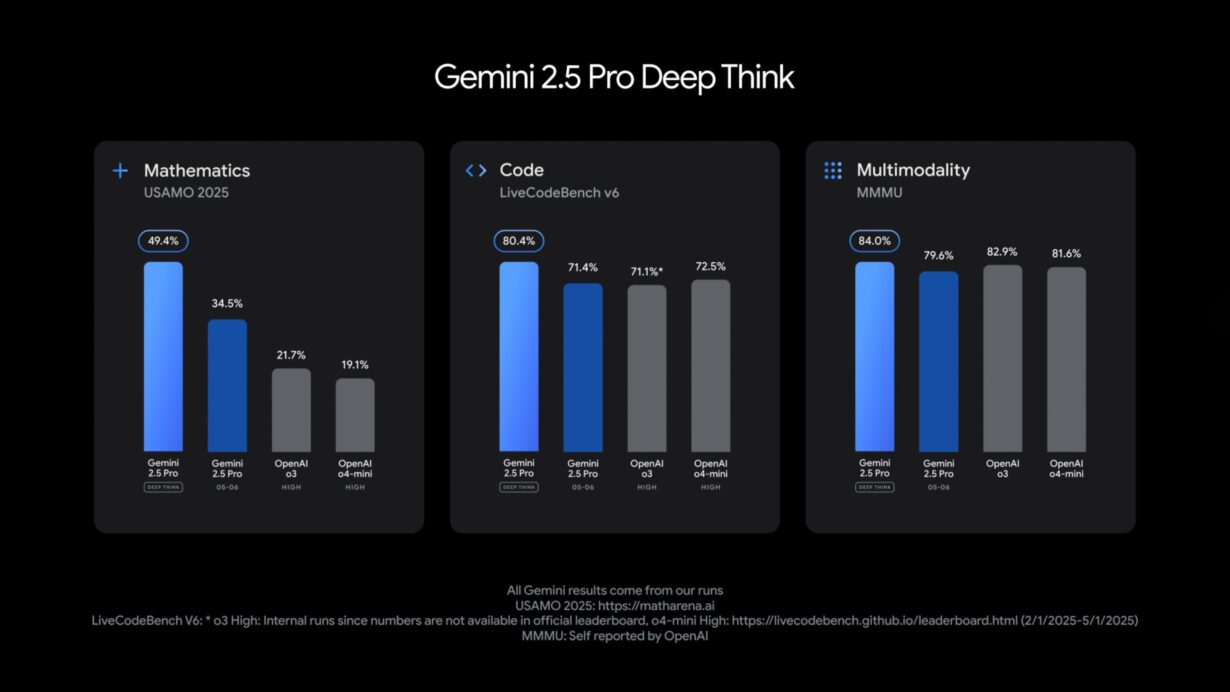
At Google I/O, significant updates were announced for Gemini.
The new Gemini 2.5 Pro introduces an experimental “Deep Think Mode”, designed to boost reasoning on complex tasks. Google also launched Gemini Live – a free, voice-powered AI assistant for Android and iOS that taps into your phone’s camera for real-world context and smarter interactions.
Google Veo 3 & Imagen 4
More from Google I/O: next-gen creativity with Veo and Imagen.
Veo 3 is Google’s latest AI video model, capable of generating longer, high-quality film sequences with precisely synchronised audio. On the image side, Imagen 4 now supports 2K resolution, delivering sharper detail and greater visual fidelity, pushing the boundaries of AI-generated content.
Alibaba Qwen3 Family
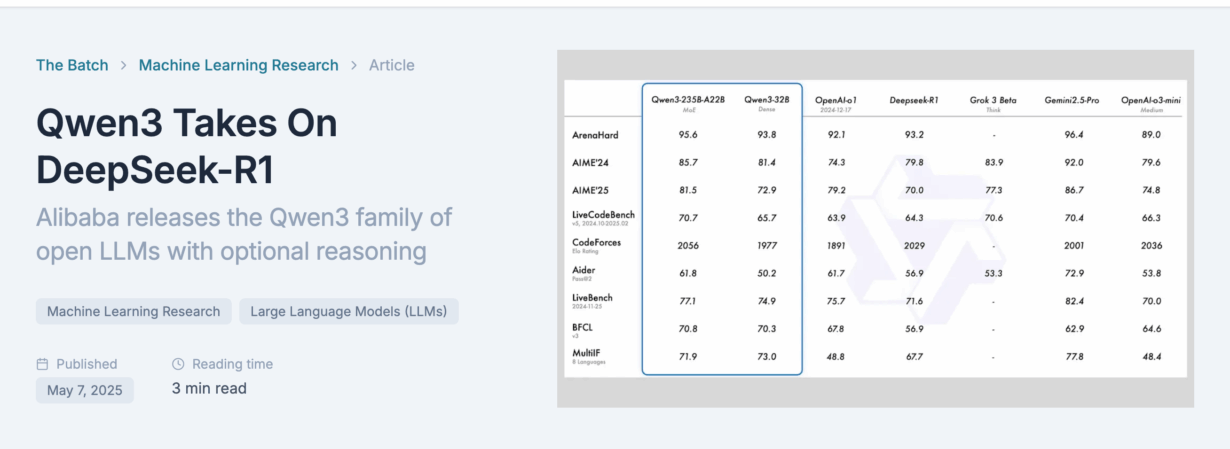
Alibaba introduced Qwen3 – a powerful new family of open-source LLMs.
Qwen3 includes both dense and Mixture-of-Experts (MoE) models. Key features include a selectable “Thinking Mode” for reasoning and impressive multilingual capabilities across 119 languages.
DeepSeek-R1-0528
A minor version upgrade of the DeepSeek R1 model, released May 28, featuring significantly enhanced reasoning and inference, a reduced hallucination rate, and better function calling support. It’s MIT-licensed, making it ready for commercial use.
Hardware
NVIDIA Grace Blackwell GB300
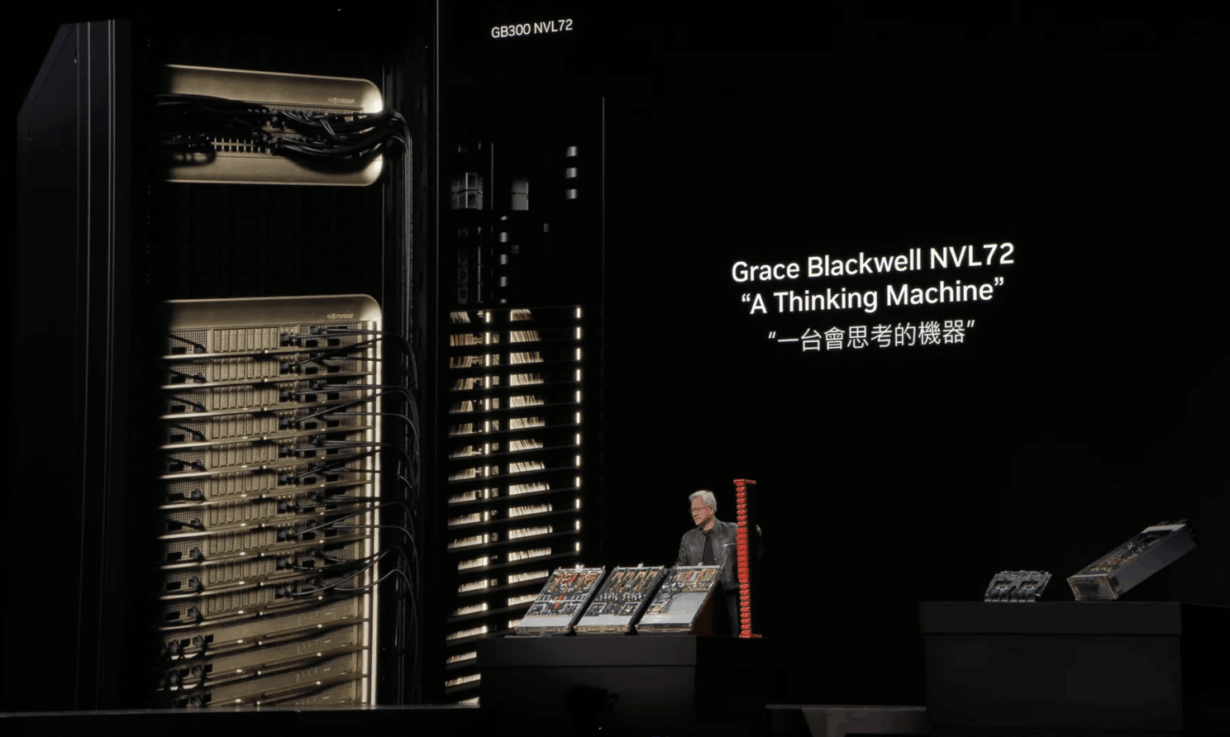
NVIDIA’s Computex highlight – the GB300 server unit.
Featuring the GB300 NVL72, it’s called “one giant GPU” and is designed for AI inference. Expected in Q3, it promises a 50% performance boost over the previous GB200 model.
NVIDIA DGX Spark & DGX Station Motherboard
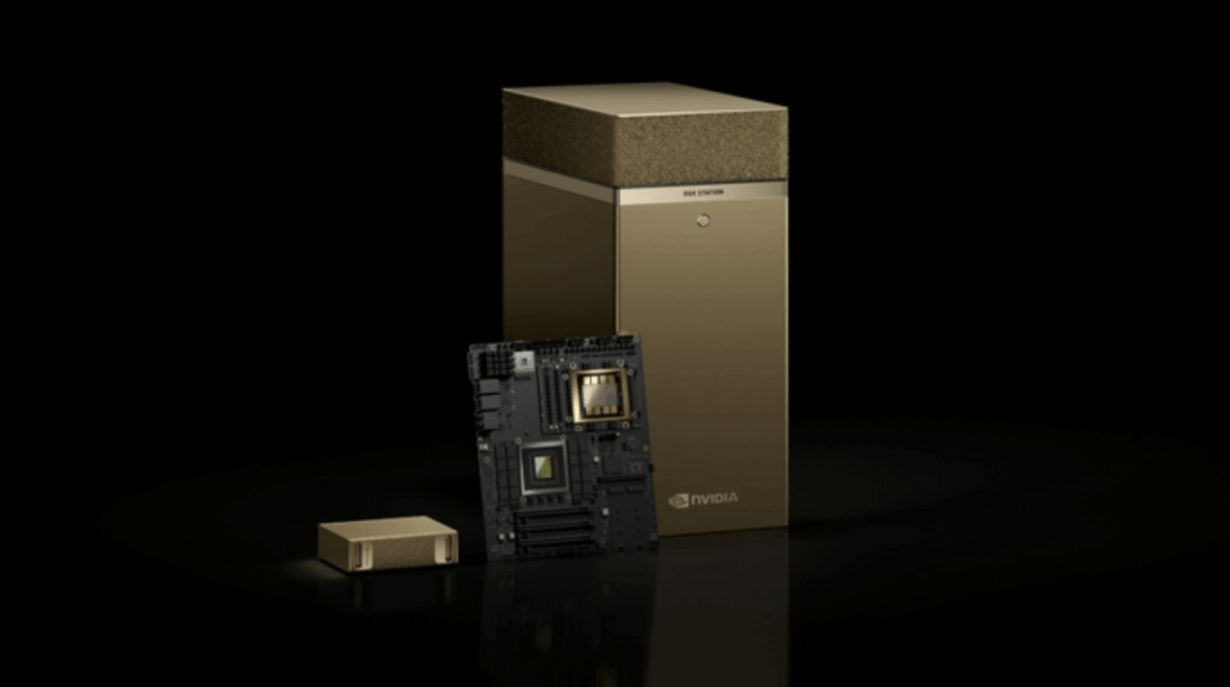
Also unveiled at Computex: DGX Spark and DGX Station motherboard.
DGX Spark is an AI-native developer PC – your personal AI cloud. The DGX Station motherboard powers desktops to run AI models with up to 1 trillion parameters. Both launch in July.
NVIDIA GeForce RTX 5060 (Desktop & Laptop)
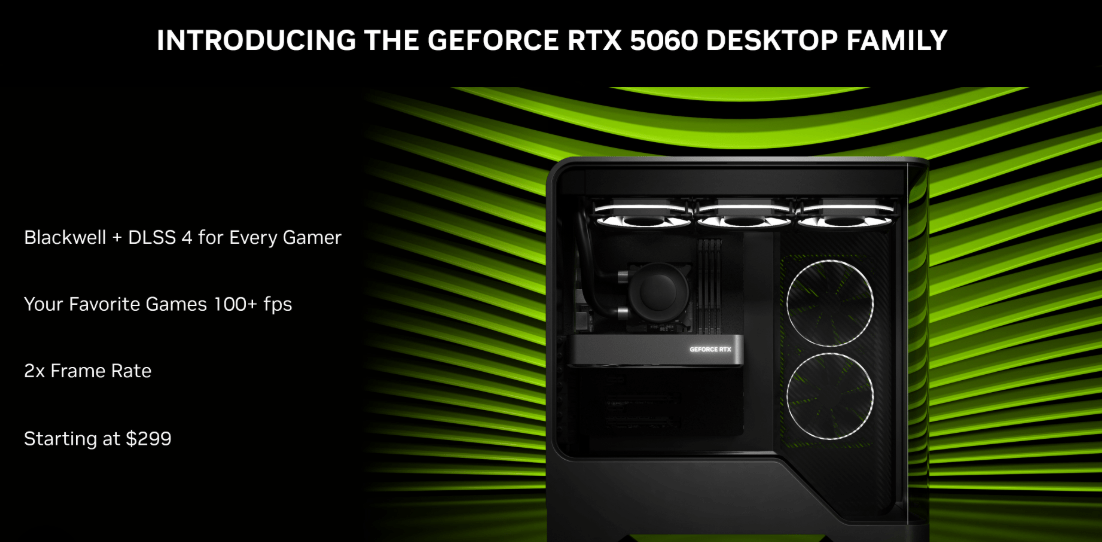
GeForce RTX 5060 is here.
Launched on May 19 at $299, the desktop GPU brings next-gen performance. RTX 5060 Laptop GPUs also dropped in May, starting at $1,099, offering double the performance of the previous generation with DLSS 4.
AMD Radeon RX 9060 XT & Radeon AI PRO R9700
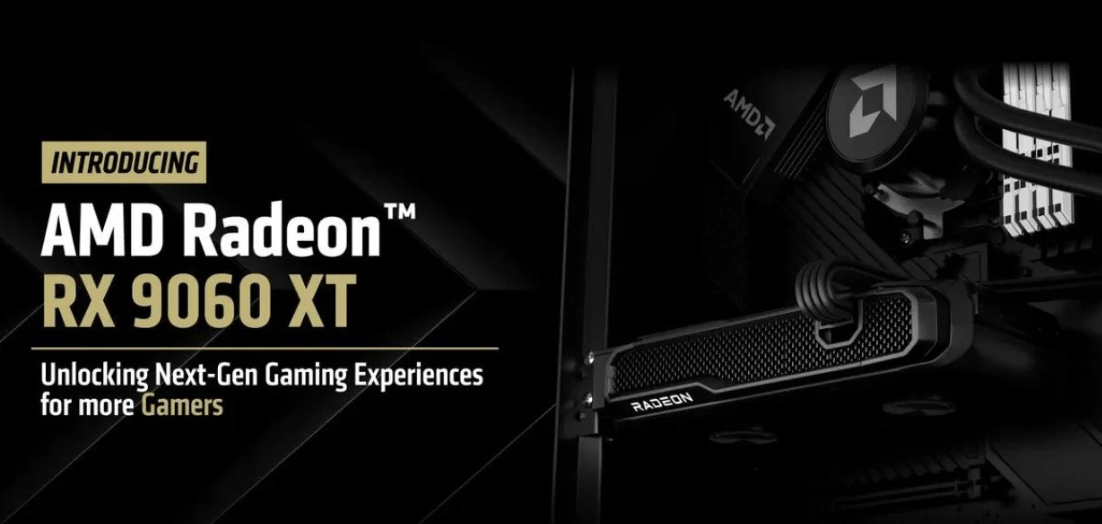
AMD’s Computex announcements included the Radeon RX 9060 XT gaming GPU (RDNA 4, 16GB GDDR6, 2nd-gen AI accelerators). For professionals, the Radeon AI PRO R9700 offers 32GB of memory and ROCm support for local AI inference and fine-tuning.
AMD Ryzen Threadripper 9000 Series
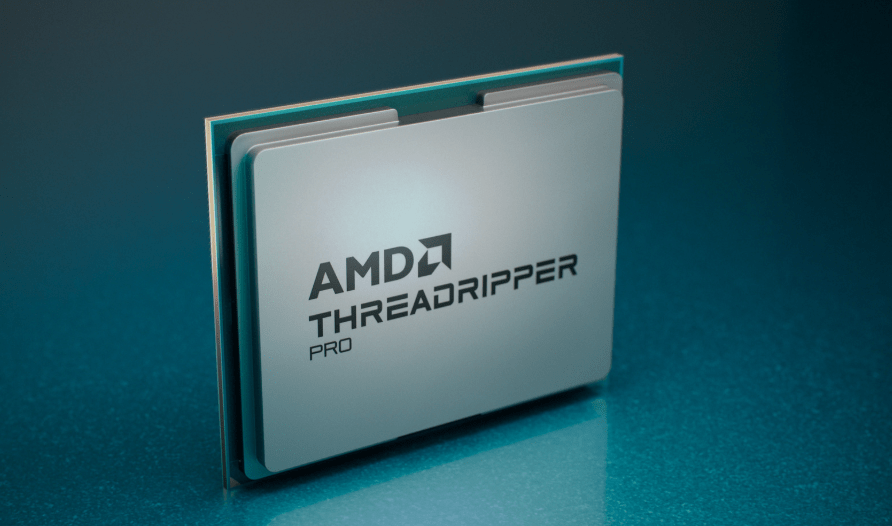
New HEDT and workstation CPUs from AMD, also unveiled at Computex. The flagship Ryzen Threadripper PRO 9995WX boasts an impressive 96 cores and 192 threads.
AMD RX 9080 XT ES Leak

AMD leak teases potential RTX 5080 Super rival.
An RX 9080 XT ES engineering sample reportedly features 3.4–3.7 GHz clocks, 256-bit GDDR7, and up to 32GB VRAM. Based on a refined Navi 48, it shows significant gains over the RX 9070 XT – but isn’t confirmed for release.
Intel Gaudi 3, Xeon 6 Updates & Arc Pro B60 Configurations

Intel at Computex: AI hardware gets a major boost.
Intel unveiled new Gaudi 3 AI accelerators (rack-scale & PCIe), Xeon 6 CPUs with Priority Core Turbo, and the Arc Pro B60 GPU with 24GB memory. For demanding AI workloads, the Project Battlematrix platform supports up to eight B60 GPUs, enabling setups like 48GB VRAM in dual-GPU configs for model development.
Other
Mistral Agents API
Mistral launches Agents API for building AI agents.
The new Agents API offers built-in tools for code execution, web search, image generation, and more. It includes persistent memory and agentic orchestration for complex, multi-step workflows.
Snyk AI Trust Platform
Snyk launches AI code security platform.
Released on May 29, the platform helps manage risks from AI-generated code. It includes Snyk Assist (chat-based insights), Snyk Agent (automation), Snyk Guard (policy control), and Snyk Labs for ongoing research.
DataRobot syftr Framework
An open-source framework launched on May 28 to help AI practitioners discover and implement optimal agentic workflows by balancing accuracy, processing speed, and cost.
Microsoft Windows Native MCP Support

Microsoft announced native support for the Model Context Protocol (MCP) in Windows 11. This integration allows AI agents to interact more effectively with native Windows applications and system services, allowing apps to expose their functionalities to local agents. A private developer preview is planned.
LM Arena Benchmark Controversy

A study by researchers from Cohere, Stanford, MIT, and Ai2 alleged that LM Arena provided unfair advantages (like private testing) to top AI labs, skewing its popular Chatbot Arena benchmark. LM Arena denied the accusations, sparking a debate on AI benchmark transparency and fairness.
ILO-NASK GenAI Job Impact Study

A joint report from May 20 reveals significant exposure to generative AI, mainly transforming job roles rather than replacing them. Impact is higher in high-income countries and among women in clerical positions.
Bloomberg RAG Dangers Research
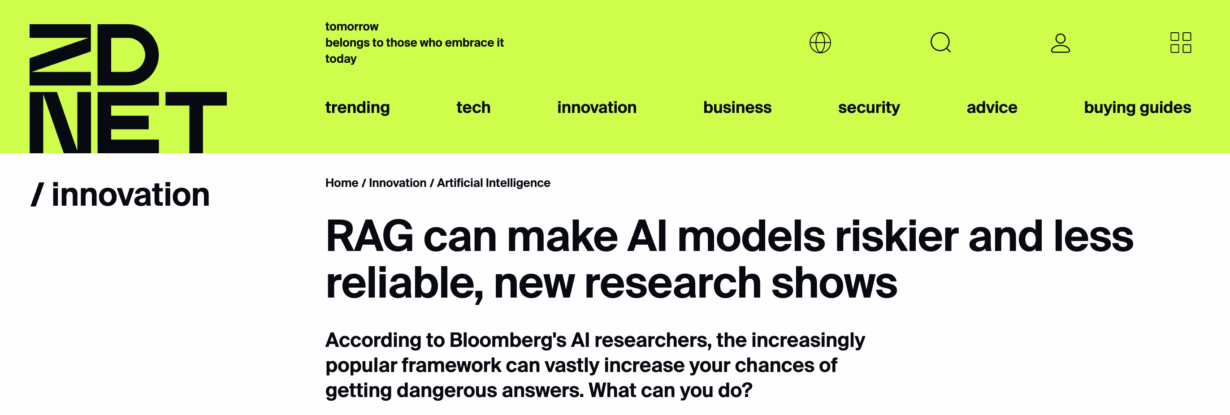
Startling research published around May 1 by Bloomberg’s AI team found that Retrieval-Augmented Generation (RAG) systems can paradoxically make LLMs less safe. Tests showed a 15-30% increase in unsafe outputs when RAG was enabled, even with “safe” models and documents.
AAMAS 2025 Conference

The 24th International Conference on Autonomous Agents and Multiagent Systems (AAMAS 2025) was held in Detroit from May 19-23. Key themes included Learning & Adaptation, Game Theory, Coordination & Ethics in Multiagent Systems, Robotics, and Human-Agent Interaction.
Summary
That’s a wrap for this month’s AI round-up!
We hope you found insights that matter – whether you’re building with AI, planning your next project, or just staying informed.
See you in next month’s edition – until then, keep learning, keep building, and don’t forget to share your favourite highlight with your network!
Want to learn more?
Explore our blog for detailed guides, technical tutorials and much more!
Also, don’t forget to join Scalac’s Talent Pool!
Check more here https://scalac.io/blog/scala-rust-devops-frontend-careers/


Authors

An AI expert and Scala developer at Scalac, providing ongoing analysis of key developments in artificial intelligence. Scalac's go-to specialist for AI trends and applications. His work bridges the gap between AI research and practical business implementation, making him a trusted voice not only among all the blog posts here, but in the AI community in general. Also, a proud owner of a Czechoslovakian Wolfdog, one of the closest-to-wolf dog breeds that you can legally own.