
Scalar Conference 2025 – Summary, highlights and what’s ahead with Scala?
A look back at Scalar Conference 2025 and what it revealed about the future of the Scala programming language.
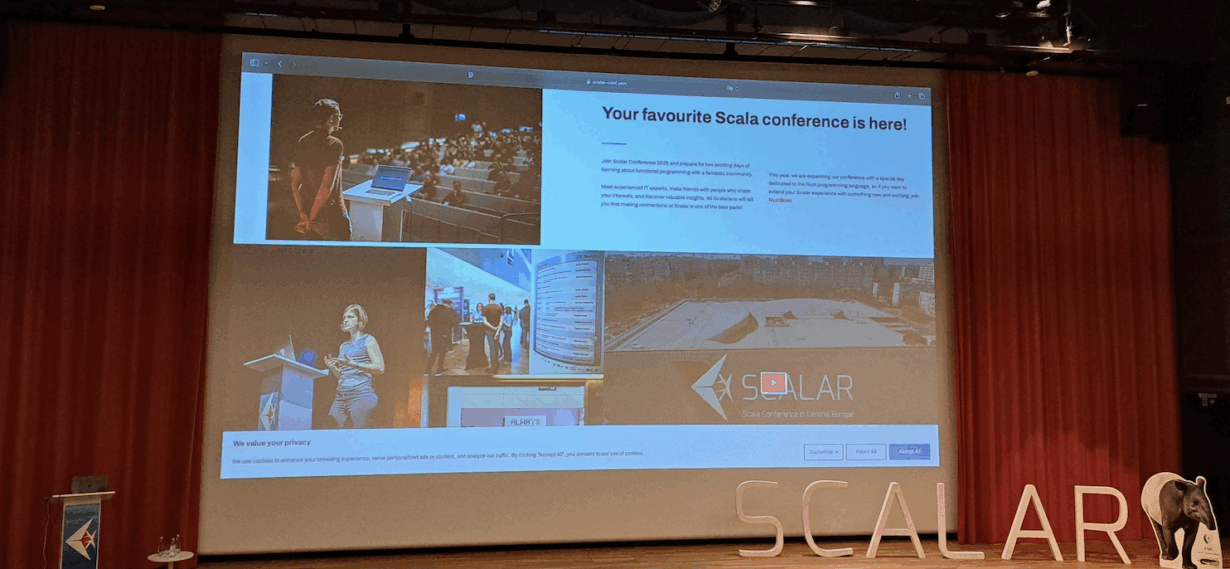
Every year, Scalar gathers the brightest minds in the Scala ecosystem, and Scalar Conference 2025 in Warsaw was no different. From language innovations to infrastructure optimization, this year’s edition of Central Europe’s biggest Scala event proved to be a powerhouse of inspiration, code, and community.
Scalac was there, of course, represented by our developer Marek, but we weren’t alone! David from Xebia, our friend and one of the hosts of our ScaLatin series, was there with us. We returned from Scalar 2025 with insights, learnings, and a lot of Scala energy to share.
In this article, you’ll find our summary and highlights of Scalar Conference 2025 – not just on the event itself, but also on what it revealed about Scala’s next moves and where the Scala 3 language is heading.
Scalar 2025 – a Scala conference like no other
With a larger attendance and the first-ever Rustikon conference preceding Scalar, the entire week in Warsaw offered a massive dose of knowledge and networking across the developer community. One of the highlights of Scalar 2025 was its single-track format. Without having to choose between parallel sessions, participants could fully immerse themselves in the Scala programming journey, following the evolving narrative of the language and its ecosystem talk by talk..
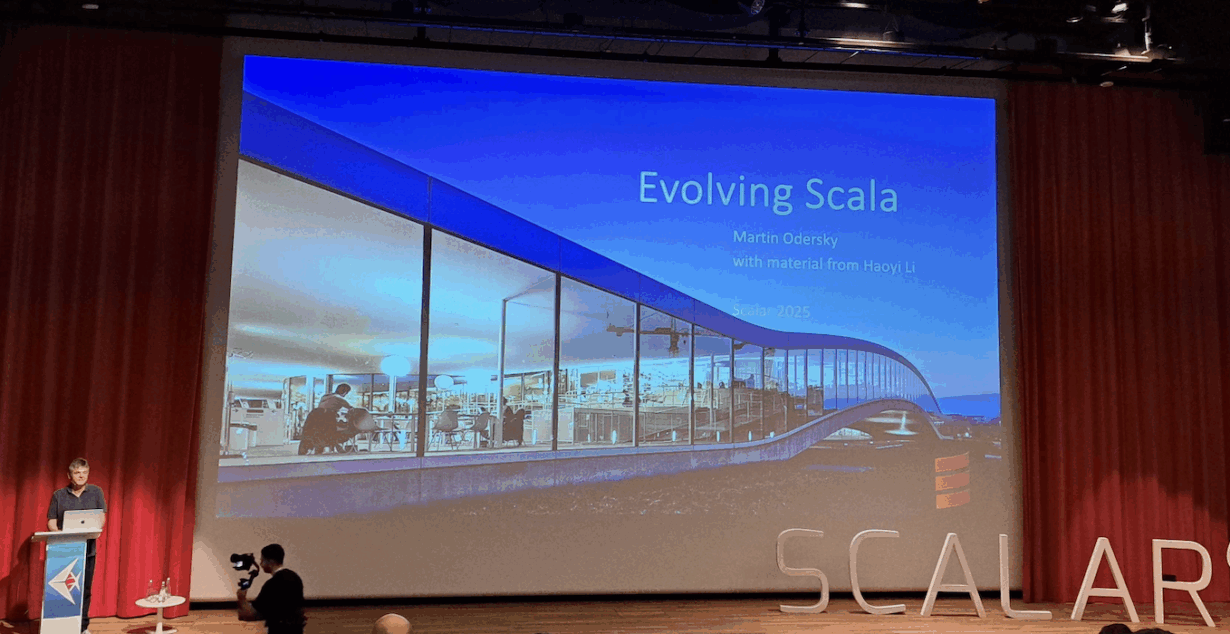
The event opened with none other than Martin Odersky, creator of Scala, setting the tone for what turned out to be an intense and content-packed Scala developer conference.
So here’s a look at the most talked-about themes and technical highlights from Scalar Conference 2025.
Cloud infrastructure and optimization in Scala
Several talks explored how to make cloud infrastructure in Scala more efficient. One standout concept? A system capable of spotting type mismatches between modules with indirect dependencies – enhancing safety without clutter.
There was also a deep dive into Scala as a native image on GraalVM, focused on significantly reducing JVM startup time – a major win for Scala-based microservices and serverless deployments.
Build tools and compilation in the Scala ecosystem
As the Scala ecosystem matures, so do its tools. But progress sometimes brings complexity. At Scalar 2025, several talks addressed this head-on, including sessions on:
- The growing complexity of SBT
- The increasing popularity of Mill build tool
- The continued evolution of Scala CLI
The message across the board? Simplicity without compromise. Whether through improved defaults, better documentation, or entirely new build tools, the Scala toolchain is becoming more powerful and more enjoyable to use.
Scala 3 Metaprogramming and Macro Redesigns
A recurring theme at Scalar 2025 was metaprogramming in Scala 3. While macros in Scala 2 were powerful yet complex, several talks at the conference highlighted how Scala 3 macros have been reimagined for accessibility.
Developers can now leverage metaprogramming without requiring deep knowledge of type theory – making it easier to innovate, onboard new team members, and boost productivity in real-world Scala applications.
Language enhancements in Scala 3.6 and beyond
Some of the most exciting Scalar Conference 2025 highlights focused on new features in Scala 3.6 and ongoing efforts to improve language ergonomics.
Key sessions included:
- Automatic JSON derivation in Scala 3, providing more efficient methods than those available in Scala 2.
- A talk by Jamie Thompson on named tuples – flexible data structures that reduce boilerplate without sacrificing clarity.
- A session by Magda Stożek on automating template management processes with Scala 3 and the Iron library to improve reliability, reduce errors, and streamline workflow.
- Noel Welch’s popular talk on a simplified, object-oriented approach to tagless final encoding, which was praised for cutting through unnecessary abstraction.
Together, these talks painted a picture of Scala 3 evolving into a more robust, developer-friendly language.
Final thoughts on Scalar conference 2025
Scalar 2025 delivered more than just technical content – it showcased the values driving the Scala programming language forward: efficiency, expressiveness, and simplicity.
From macro redesigns to improvements in cloud infrastructure and developer tooling, the Scala community demonstrated that the language isn’t standing still. It’s growing in all the right directions – more practical, more approachable, and better aligned with modern software development needs.
If you missed the event, be sure to check out the recordings on YouTube and sign up for the Scalar newsletter. And until next time… keep coding and stay curious!
Also, again – a massive shout-out to our friend David from Xebia. Your insights, conversations, and presence helped make this event even more memorable!


Authors

Popular Posts in category
Looking into Scala.js
Your first microservices using Scala and Lagom
Handling Split Brain scenarios with Akka