
THE SIGNAL: What matters in distributed systems | #2
April 2026 | Issue #2
Welcome back. In March we covered MCP as a protocol debate. In April the reality arrived. Claude Code hit a wall on Hacker News: 738 points, 458 comments as engineers reported regressions in complex engineering tasks. MCP and A2A protocols crossed into production maturity. The vibe coding era meets production reality.
Today
- Claude Code backlash gathers 738 points and 458 comments on Hacker News as developers report quality regressions in complex engineering tasks
- MCP Dev Summit draws 1,200 attendees in New York. A2A v1.0 ships with Signed Agent Cards, multi-tenancy, and gRPC
- Rust 1.95.0 stabilizes `if let` guards in match arms and `cfg_select!` for conditional compilation
- JVM ecosystem accelerates on JDK 17+: Scala 3.8 requires JDK 17, forcing teams to split legacy on 3.3 LTS and new projects on 3.8.x. Spring Boot virtual threads hit production but pinned carrier threads remain a real-world problem
- Strimzi 0.51 and kroxylicious 0.19.0 add Kafka 4.2.0 support for Kubernetes and protocol proxies
- Ammonite is deprecated — the REPL that powered half the Scala ecosystem is officially unmaintained. Teams must migrate to Scala CLI or plain `scala` repl
- CVE in sbt – command injection vulnerability patched in sbt 1.12.9 and 2.0.0-RC12. Security teams should audit build definitions
- Kafka 4.2.0 Share Groups hit production with KIP-1226 lag metrics, but partition-level observability drops
The Architecture Debate: AI Coding Agents — Augmentation or Throughput Trap?
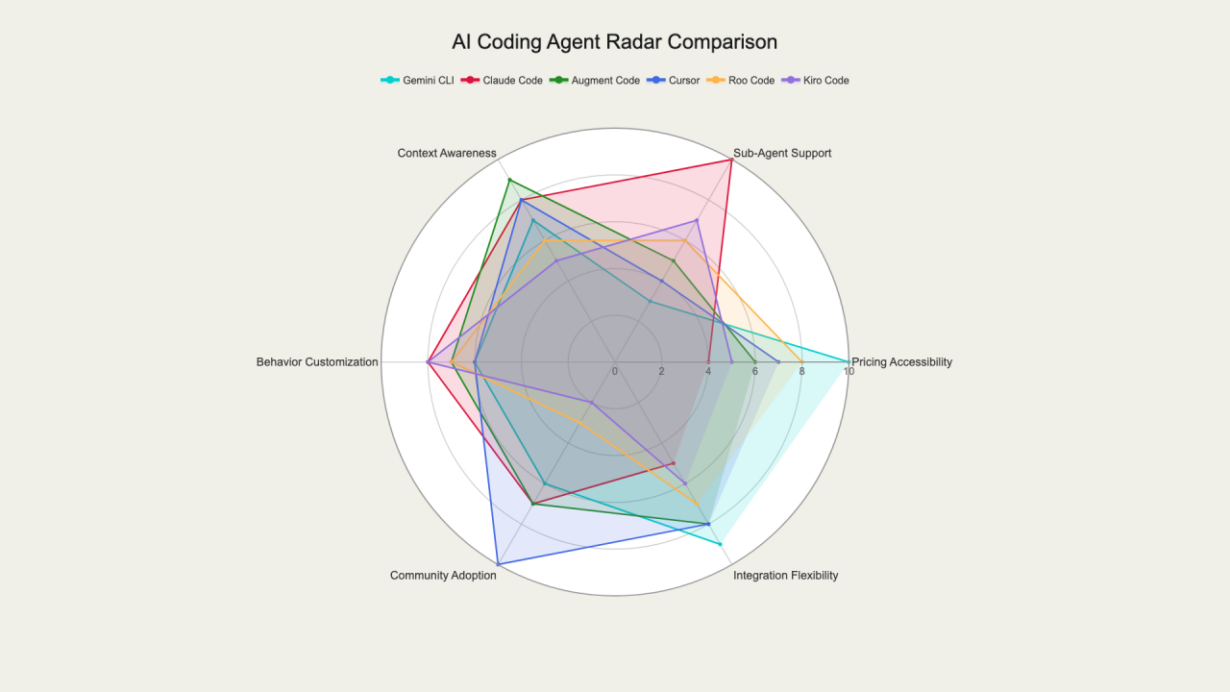
Claude Code hit a wall in April. A Hacker News thread from early April gathered 738 points and 458 comments as developers reported major regressions after February updates. Users described crashes during refactoring, logical chaos in generated changes, and configurations so complex that teams spent more time tuning settings than writing code. Anthropic responded that the issues stem from default effort tuning and UI behavior, not model intelligence. The community split: some confirmed output regressions, others noted that high effort mode still works but requires navigating a maze of settings, env variables, slash commands, and magic keywords.
That is not a Claude-specific problem. It is an architecture problem. Bram Cohen published “The cult of vibe coding is dogfooding run amok” in April, arguing that AI coding tools increase bad-code throughput faster than review discipline can scale. The pattern is consistent across tools: the model generates plausible-looking code that passes superficial review, then fails in integration, edge cases, or concurrency. Teams discover the debt weeks later when production metrics degrade.
The enterprise split is becoming visible. One camp treats AI coding as augmentation: pair programming with a junior that never sleeps, but always needs senior review. The other camp treats it as throughput multiplication: ship more stories per sprint, measure output not outcome. The first camp sees modest gains and stable systems. The second camp sees velocity spikes followed by incident waves. JPMorgan reportedly achieved 83% faster research cycles with its LLM Suite, but those are analyst-reported metrics in a narrow domain, not general software engineering.
Scalac angle: Do not ban AI coding tools. Ban AI-generated changes in critical paths without architectural review. Use agents for boilerplate, tests, and documentation. Never use them for distributed consensus logic, concurrency primitives, or schema migrations. Measure bug rate per commit, not lines written. If your team cannot explain why an AI-generated change works, it does not work.
Notes from the Trenches: MCP and A2A Hit Production — The Governance Gap
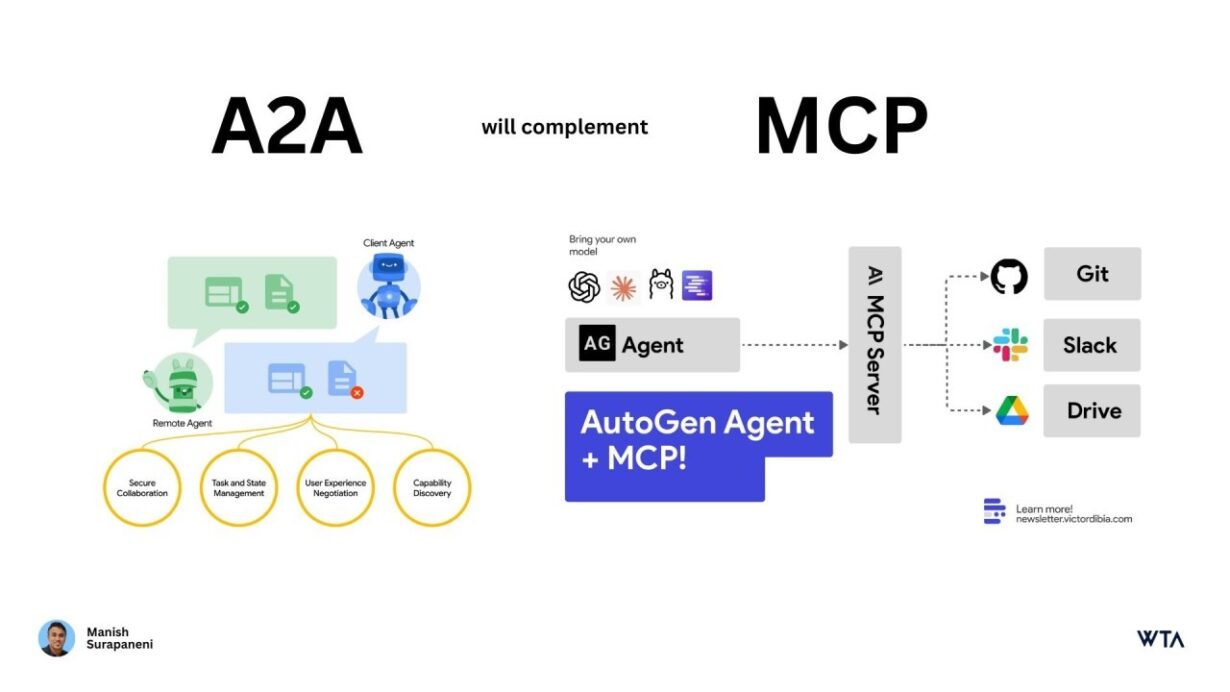
MCP and A2A protocols reached production maturity in April. MCP crossed 97 million monthly SDK downloads with 10,000+ active servers. A2A v1.0 shipped with Signed Agent Cards, multi-tenancy, and gRPC. 150+ organizations now support A2A. The protocols work.
The Problem: Protocols do not replace policy. Teams adopt MCP servers without authentication boundaries. A2A agent cards expose capabilities without rate limiting. The “connect everything” mindset creates shadow agent infrastructure. You cannot audit what you cannot see.
The Solution: Treat agent protocols like API gateways. Require authentication on every MCP server. Rate-limit A2A agent discovery. Maintain an internal agent registry. Do not let every team spin up an MCP server for their spreadsheet.
Scalac angle: Evaluate MCP/A2A for 2026 roadmaps. Start with internal tools and documentation agents. Never expose MCP servers to external networks without authentication. Measure agent actions, not agent adoption.
Signal Over Noise: Three Critical Changes This Month
1. Rust 1.95.0 stabilizes if let guards and cfg_select!
Released April 16, 2026. if let guards in match arms eliminate nested pattern matches and reduce unwrap-driven crashes. cfg_select! provides a compile-time conditional match on configuration flags, replacing the cfg-if crate dependency. Six Apple platforms promoted to Tier 2 with host tools: tvOS, watchOS, and visionOS on arm64 and simulators.
Practical takeaway: upgrade if you maintain cross-platform services or async code with complex pin projections. Embedded targets on custom LLVM versions should wait for toolchain validation.
2. Strimzi 0.51 and kroxylicious 0.19.0 ship Kafka 4.2.0 support
Released April 2026. Strimzi adds support for Kafka 4.2.0 in Kubernetes, enables per-listener connection settings, and defaults to server-side applies for core resources. Kroxylicious updates its authorizer filter for transactional ID checks and adds configurable idle timeouts for authenticated and unauthenticated connections.
Practical takeaway: teams running Kafka on Kubernetes can now upgrade brokers to 4.2.0 without waiting for operator support. Proxy teams gain production-hardened connection management.
3. Apache Kafka 4.2.0 graduates Share Groups to production-ready status
Released April 2026. KIP-932 introduces cooperative consumption where multiple consumers process records from the same partition concurrently. KIP-1226 adds share partition lag metrics for autoscaling. The partition-to-consumer binding that limited scaling since 2011 is finally gone. But partition-level metrics vanish. Existing dashboards break because the broker manages delivery counts and lock timeouts instead of exposing per-partition throughput.
Practical takeaway: Deploy Share Groups for the 20% of topics that need elastic scaling. Keep traditional consumer groups for the 80% where partition affinity matters. Test monitoring before you test throughput.
Community Voice: What We’re Hearing
JVM concurrency — Mike MyBytes documents real-world virtual thread pinning: “The only reasonable way of knowing if your app is pinning-free is to actively monitor for its occurrences.” Spring Boot teams hitting production with virtual threads are auditing dependencies for synchronized blocks and `ConcurrentHashMap` usage that pin carrier threads.
Kafka operations — The Conduktor awesome-kafka community tracks KIP-932 adoption: “Native queue semantics via share groups: per-message acknowledgment, delivery counting, elastic scaling beyond partitions.” Production teams migrating from traditional consumer groups report partition-level metrics disappear and dashboards require rebuilding.
Rust developers — Linuxiac covers the 1.95.0 release: “Support for if let guards within match expressions… enabling additional conditional pattern checks directly in match arms.” The community notes this eliminates nested pattern matching and reduces unwrap-driven crashes in async code.
Scala REPL — This Week in Scala reports Ammonite deprecation as the top community story of April: “Ammonite is now deprecated.” Teams relying on Ammonite scripts for CI and local tooling are migrating to Scala CLI. The native `scala` repl in 3.8.x is the supported path forward.
In the Know
Scala Survey 2026 closed March 31. Results from VirtusLab and Scala Center are expected in April and will directly shape Scala 3.9 LTS priorities.
Kafka Monthly Digest: March 2026 – published April 3 by Red Hat. The community submitted 16 KIPs (1293 to 1308). Highlights include KIP-1303 on tiered storage follower deprioritization and KIP-1307 on SerDe and interceptor metrics.
CVE: Command Injection Vulnerability in sbt – patched in sbt 1.12.9 and 2.0.0-RC12. Build definitions that interpolate user input into shell commands are the attack vector. Audit your `build.sbt` for `%%`, `!!`, or `Process` calls that touch untrusted data.
Top Resources
Repo: strimzi-kafka-operator 0.51 — Kubernetes operator for Kafka now supports 4.2.0 with per-listener connection settings and server-side applies. Running Kafka on Kubernetes? This is your upgrade path.
Tool: Metals v1.6.7 — Osmium — Scala language server with MCP integration for AI agents. AI coding tools can now compile, test, and refactor Scala code directly from the IDE. If your team experiments with Claude Code or Cursor on Scala codebases, Metals Osmium is the bridge.
Paper: KIP-1303: Deprioritize Tiered Storage Followers In Leader Election — Kafka 4.3 will allow new replicas to sync faster by skipping remote storage. The tradeoff is degraded performance if those replicas become leaders. Planning tiered storage? Understand the election bias.
Signal is published by Scalac. We build distributed systems for teams who ship.
What is SIGNAL? A monthly briefing for senior engineering leaders. Three sections: Architecture Debate, Notes from the Trenches, Signal Over Noise. No hype. No vendor pitches. Just lessons that matter.
References
- Rust 1.95.0 Release Notes
- Rust 1.95.0 Changelog
- Apache Kafka 4.2.0 Release Announcement
- Kafka Monthly Digest: March 2026
- KIP-932: Queues for Kafka
- KIP-1226: Share Partition Lag Persistence and Retrieval
- KIP-1303: Deprioritize Tiered Storage Followers In Leader Election
- A2A Protocol v1.0 Release
- MCP Dev Summit North America
- Strimzi 0.51 Release
- Kroxylicious 0.19.0 Release
- Scala Survey 2026