You probably know programming languages rankings like Tiobe Index or The RedMonk Programming Language Ranking.
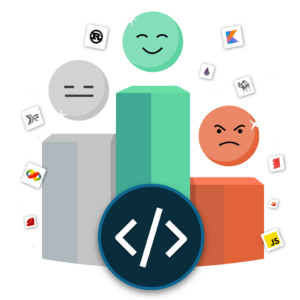
But what’s unique about The Programming Languages Ranking 2022 is that it’s based on sentiment, not popularity. So even though Tiobe and RedMonk are valuable sources of knowledge on the programming languages trends, our ranking fills the gap they’re both missing.
The missing ingredient is the real meaning behind the mentions that the above rankings count. The Scalac Programming languages ranking 2022 adds this layer uncovering the truth behind what people think, not only how many times.
Our first ranking from this series represented the sentiment analysis of the functional programming languages family. In the process, we discovered how misleading the numbers could be. The fact that the language is popular doesn’t mean people love it. What’s more – in some cases, almost as many people may love the programming language as many can hate it.
But let’s stop the introduction here and let the data speak for itself.










Position